The Honolulu Marathon starts in the dark and finishes in the heat. The official FAQ says race morning is often in the mid-60s °F (18 to 20 °C), rising to the low 80s °F (27 to 28 °C) by mid-morning, humid and sunny. The race starts at 5:00 a.m. on Sunday, December 13, 2026, and sunrise is about 7:00 a.m., so the first two hours are run before daylight. Dress for warm, humid conditions, not for the cool start, and plan for strong sun once it’s up.
Here’s how the morning usually unfolds, and what to wear from the shuttle line to the finish.
What is the weather like on Honolulu Marathon morning?
December is winter in Hawaiʻi, but winter here is mild. For runners, the thing that matters is how fast the morning changes. You’ll stand in the start area in comfortable, slightly cool air, then finish in warm, sticky sunshine.
Here is the shape of race morning, using the official FAQ’s temperatures and the sunrise time for December 13:
| Time | Light | What the official FAQ and the clock tell you |
|---|---|---|
| 2:00 to 4:00 a.m. | Dark | Free shuttles run from the Honolulu Zoo to the start; race morning is often in the mid-60s °F (18 to 20 °C) |
| 5:00 a.m. | Dark | Start, opened with fireworks; everyone must cross the line by 5:30 a.m. |
| About 7:00 a.m. | Sunrise | The first two hours of the race are over; the sun comes up |
| Mid-morning | Full sun | Temperatures rise to the low 80s °F (27 to 28 °C), humid and sunny |
| Late morning onward | Full sun | Walkers and slower runners are still on course; there’s no time limit |
Two things stand out. First, nobody runs this race entirely in the cool. Even the fastest runners see the sun rise. Second, the longer you expect to be out there, the more of your race happens in the warmest part of the morning. If you plan to walk all or part of it, our guide to walking the Honolulu Marathon is worth reading alongside this one.
The official FAQ also says the race goes ahead rain or shine. Officials may delay, modify or cancel it in dangerous conditions, so keep an eye on official race messages in the days before.
What does a dark 5 a.m. start mean for your clothes?
With sunrise around 7:00 a.m., you’ll run downtown, back through Waikiki and up toward Diamond Head under streetlights. A few practical points follow:
- Light-colored tops are easier to see. Spectators, volunteers and other runners spot you more easily in the dark.
- Sunglasses aren’t useful at the start, but you’ll want them later. Wear them pushed up on a cap, or tuck them in a belt.
- Watch your footing. City streets have curbs, reflectors and the odd pothole. Clothes that don’t flap or hang low help you see your feet.
- You’ll stand still for a while. Between the shuttle, the walk to your corral and the wait for the start, you may be on your feet for an hour or more before you run. That’s when a cheap extra layer earns its place.
Our race morning guide covers shuttle times and timing for the walk to the start.

How humid is it, and why does it change what you wear?
The official FAQ describes race morning as humid. In humid air, sweat doesn’t dry off your skin as easily, so clothes get damp early and stay damp. Damp fabric is heavier, rubs more, and feels warmer.
That leads to a few simple rules:
- Choose technical fabrics made for running. Skip cotton for anything you plan to wear past the start line.
- Go lighter than you think. A singlet or a light short-sleeved top usually makes more sense here than anything with long sleeves.
- Pick clothes you’ve already run long in. A shirt that’s fine for an hour at home can rub badly by mile 20 when it’s soaked.
- Protect against chafing with whatever anti-chafe product you use in training, on the usual spots.
- Wear socks that handle moisture. Wet socks are a common cause of blisters on a long, humid run.
The heat itself, and how to prepare your body for it, is a bigger topic than clothing. Talk to your doctor or coach about that, and follow the race medical staff on the day.
Will it rain during the Honolulu Marathon?
It might. Passing showers are possible in Honolulu in December, and the official FAQ is clear that the race goes ahead rain or shine. A short shower on a warm morning often feels welcome. A longer one brings a few problems:
- Wet shoes and socks. If you have a second pair of race-tested socks, they’re worth packing for after the finish.
- Rubbing. Wet fabric chafes more, so be generous with anti-chafe before you start.
- A cap helps keep rain out of your eyes, and it does double duty as sun protection later.
- A cheap poncho or plastic bag can keep you dry while you wait at the start. Treat it as throwaway (see below).
Don’t plan around a forecast more than a few days out. Check it on Friday and Saturday of race week and adjust your start layer if rain looks likely.
What should you wear for the Honolulu Marathon, layer by layer?
This is general guidance. Wear what you’ve trained in, and don’t try anything new on race day.
| Layer | What to consider | Why |
|---|---|---|
| Base top | Light, technical singlet or short-sleeved shirt, preferably light-colored | Humid and sunny by mid-morning; easier to see in the dark |
| Bottoms | Running shorts or light tights you’ve worn on long runs | Less fabric means less heat and less rubbing when wet |
| Socks | Moisture-handling running socks you trust | Reduces the chance of blisters in damp conditions |
| Shoes | Your broken-in running shoes | The FAQ strongly recommends running shoes; barefoot and sandals are permitted |
| Head | Cap or visor | Shade after sunrise, rain out of your eyes |
| Eyes | Sunglasses, carried or worn up on the cap | Full sun after about 7:00 a.m. |
| Skin | Sunscreen, lip balm with sun protection | You’ll be in the sun for part or most of your race |
| Start layer | Old long-sleeved shirt, cheap poncho or plastic bag | Mid-60s °F while you wait in the dark; you won’t get it back |
| Extras | Small belt or hydration vest, if you train with one | Allowed by the race; useful for gels, phone and sunglasses |
Can you wear a costume?
Yes. The official FAQ allows costumes that don’t endanger you or other runners and don’t overheat you. In a humid race that warms up quickly, that second part is the one to take seriously. Lighter is better, and test it on a long run first.
Headphones and phones
Both are allowed. The FAQ asks you to stay aware of what’s around you, which matters even more in the dark first two hours when the field is packed.
Do you need a throwaway layer, and where can you leave your gear?
This is where Honolulu differs from many big-city marathons. There’s no gear check at the start or on the course. Whatever you wear to the start line, you either carry for 26.2 miles or leave behind.
There is a clothing-only check-in tent at Kapiʻolani Park, near the finish. Only the official bag from packet pickup is accepted there, and bags not claimed by 3:00 p.m. on race day are donated. The official FAQ is inconsistent about which day that tent operates, so check the official FAQs for current times before you plan around it. Our Expo and packet pickup guide explains where you collect your packet.
What that means for your start layer:
- Bring something you’re happy to lose. An old long-sleeved shirt, a cheap poncho or a plastic bag with holes for your head and arms.
- Don’t wear anything valuable or sentimental to the start. Assume you won’t see it again.
- Take it off before you get warm. Many runners shed the layer in the corral or in the first mile, once the crowd starts moving. Step to the side of the road so nobody trips on it.
- Put dry clothes in your official bag for the finish, if the clothing tent fits your plans: a dry shirt, a hat and comfortable footwear go a long way after you finish.
How do you protect yourself from the sun on race day?
Sunrise is about 7:00 a.m., and the FAQ calls mid-morning “humid and sunny.” After the first two hours, you’re in it. The east side of the course, along Kalanianaʻole Highway toward Hawaiʻi Kai, is open road along the coast, and the return past Kāhala and around Diamond Head comes later in the morning for most people.
Simple, widely accepted sun habits:
- Put sunscreen on at the hotel, before you leave in the dark. It’s easy to forget when the sky is black at 3:00 a.m.
- Use a sweat-resistant sunscreen and keep it away from your eyes. Sweat carries it down your face.
- Wear a cap or visor, even if you don’t need it at the start.
- Bring sunglasses for after sunrise.
- Don’t forget the tops of your ears, the back of your neck and your shoulders, especially in a singlet.
If you’re walking, you’ll be out longer and in the strongest sun, so sun protection matters even more.
What should supporters wear on race morning?
If you’re cheering, you’ll be standing in the dark and then the sun, often walking between spots. Comfortable shoes, a light layer for the early hours, a hat, sunscreen and water cover most of it. If you’re meeting your runner at the finish in Kapiʻolani Park, bring a dry shirt or towel for them too.
For supporters who’d rather spend part of race week seeing the island, our Honolulu Marathon 2026 visitor guide covers the whole week.
Seeing the island during race week? Supporters and family often tour Thursday to Saturday while runners rest, and runners join after the race from Monday on. The Standard tour is $59 per person with a free malasada and free snorkel gear. Check dates and book the tour
What should you wear on a tour day after the race?
December weather is usually just as pleasant for sightseeing as it is warm for running. If you’re joining our full-day circle island tour from Monday, December 14 onward, think comfort first:
- Loose, light clothes and comfortable shoes or sandals. Most of the 9.5-hour day is spent riding between stops, and you choose how much you walk at each one.
- A swimsuit, if you’d like to snorkel at Turtle Beach, our longest stop at 1 hour 15 minutes. Snorkel gear is free on the Standard tour and on private charters.
- A hat, sunscreen and sunglasses, because the North Shore is sunny too.
- A light layer for the air-conditioned ride.
Our what to pack for a full-day Oahu tour list covers the rest, and the full-day tour page has the stops and timings. Please don’t plan a tour for Sunday, December 13: roads on our route are closed that morning, so call (808) 294-9906 first if you’re thinking about it.
If you or someone in your group needs a gentler day, our guide to accessible Oahu tours talks through options.
Good to know (checked November 2026)
- The official FAQ says race morning is often mid-60s °F (18 to 20 °C), rising to the low 80s °F (27 to 28 °C) by mid-morning, humid and sunny.
- Sunrise on December 13 is about 7:00 a.m. (NOAA solar formula), so the first two hours are run in the dark.
- The race goes ahead rain or shine; officials may delay, modify or cancel it in dangerous conditions.
- There’s no gear check at the start or on the course. Check the FAQ for the clothing-only tent times at Kapiʻolani Park.
- Sources: the official FAQs and the JAL Honolulu Marathon event page.
FAQ
How hot is it during the Honolulu Marathon?
The official FAQ says race morning is often in the mid-60s °F (18 to 20 °C), rising to the low 80s °F (27 to 28 °C) by mid-morning. It’s usually humid and sunny once the sun is up.
What time is sunrise on Honolulu Marathon day?
About 7:00 a.m. on Sunday, December 13, 2026. The race starts at 5:00 a.m., so the first two hours are in the dark.
Does the Honolulu Marathon happen if it rains?
Yes. The race goes ahead rain or shine, though officials may delay, modify or cancel it in dangerous conditions.
Should I wear a throwaway layer at the Honolulu Marathon?
If you get cold standing around before dawn, yes. There’s no gear check at the start, so wear something you’re happy to leave behind once you warm up.
Is there a bag check at the Honolulu Marathon?
Not at the start or on the course. There’s a clothing-only check-in tent at Kapiʻolani Park that accepts only the official bag from packet pickup; check the official FAQ for its times.
Can I wear a costume in the Honolulu Marathon?
Yes, as long as it doesn’t endanger you or others and doesn’t overheat you. In a warm, humid race, choose something light and test it on a long training run.
Dress for the finish, not the start
The cool, dark start is the easy part. The decisions that matter are about the warm, sunny, humid miles later on: light fabrics you’ve tested, sun protection put on before you leave the hotel, and a start layer you won’t miss. Get those right and you can enjoy the fireworks, the lights downtown and the sunrise somewhere along the coast.
After the race, sit back and see the island. From Monday, December 14, our full-day tour picks up at six points in Waikiki between 6:50 and 7:15 a.m., starting at the Diamond Head Lookout on the road you ran. The Promo loop is $49 with code FANTASY50. Check dates and book the tour
Aloha Fantasy Tours has run circle island tours on Oahu since 2010.
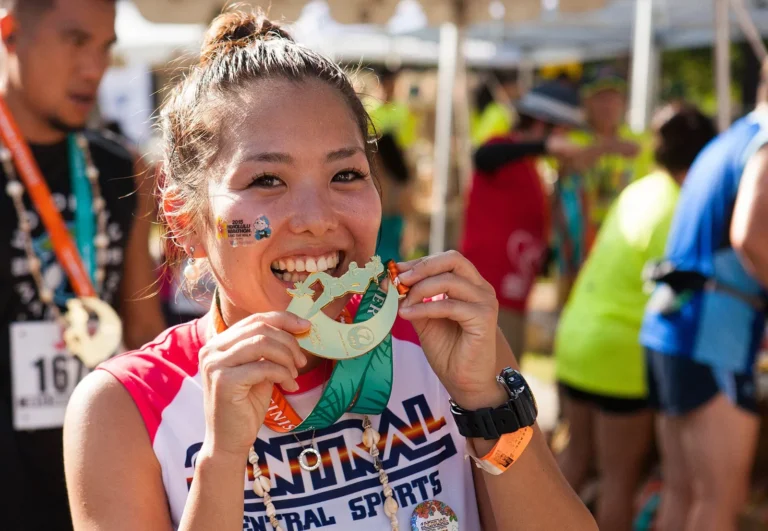
Photo credits: Daniel Ramirez from Honolulu, USA, CC BY 2.0; Anthony Quintano from Honolulu, HI, United States, CC BY 2.0. Race photos are from past Honolulu Marathons.