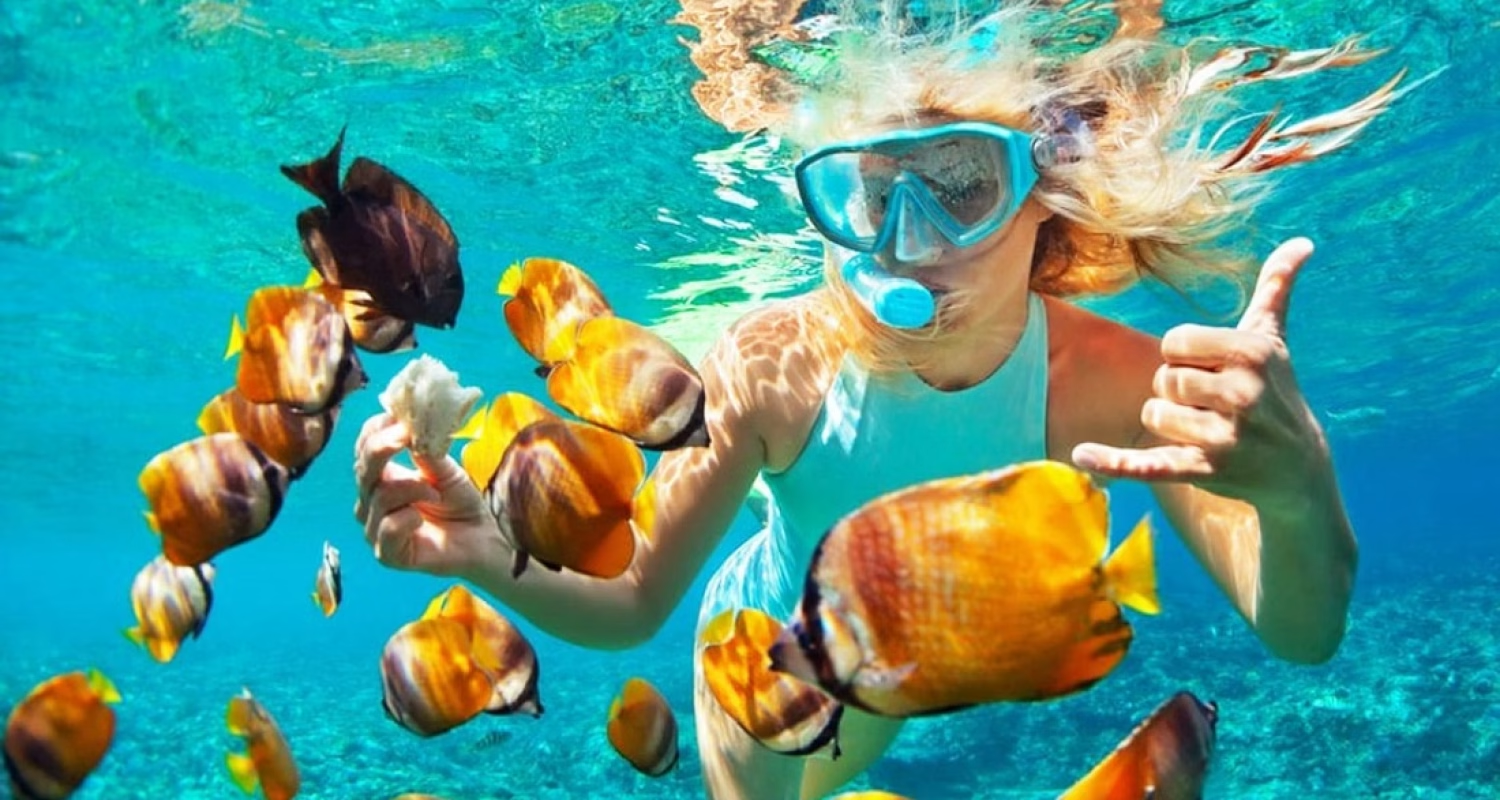
The best place for a beginner to snorkel on Oahu is Hanauma Bay, a protected bay inside an old volcanic crater with shallow reef, lifeguards and a short safety briefing before you enter. It needs a reservation and an entry fee, and it’s closed Mondays and Tuesdays. Other calm starting points include Kuilima Cove on the North Shore and the man-made lagoons at Ko Olina. In winter, avoid exposed North Shore spots like Shark’s Cove, where big surf makes the water dangerous.
Here’s where to go, how to get comfortable in the water, and how to snorkel without harming the reef or the honu.
Why Oahu is a good place to learn
Oahu’s reefs sit close to shore, so in many places you can wade in from the sand and be floating over coral and fish within a few minutes. The water is warm all year, around the mid-70s to low 80s Fahrenheit, and visibility on a calm morning can be excellent.
The catch is that the ocean here is powerful. The same island that has gentle bays also has some of the biggest surf in the world, and conditions change by season and by the hour. Learning to snorkel on Oahu is mostly about choosing the right spot on the right day.
Where beginners should snorkel
| Spot | Where | Best for beginners because | Watch out for |
|---|---|---|---|
| Hanauma Bay | Southeast shore, near Hawaiʻi Kai | Sheltered, shallow inner reef, lifeguards, safety briefing | Reservation and fee; closed Mon and Tue; shallow coral at low tide |
| Kuilima Cove | North Shore, at Turtle Bay | Reef-protected cove that often stays calm when the coast is rough | Currents near the point in high surf; check for lifeguards |
| Ko Olina lagoons | West side | Man-made, sheltered lagoons with gentle water | Fewer fish than open reef; limited public parking |
| Shark’s Cove (Pūpūkea) | North Shore | Rich tide pools and reef in summer | Calm roughly May to October only; dangerous in winter; no lifeguard; sharp rocks |
Hanauma Bay
Hanauma Bay is a marine life conservation district, and it’s where most first-timers on Oahu should start. Every visitor watches a short video about reef safety before going down to the beach, which is genuinely useful if you’ve never snorkeled. The inner reef is shallow, so you’ll see fish within minutes of getting in.
It’s popular, and the reservation system takes some planning. Our guide to whether Hanauma Bay is worth it explains how to book and when to go.
Kuilima Cove
On the North Shore, Kuilima Cove beside the Turtle Bay resort is protected by an outer reef that breaks the swell before it reaches the inner water. It often stays calmer than nearby beaches, even in winter, though it can get churned up on big days. Green sea turtles are sometimes seen in the cove. Gear rentals are close by.
Ko Olina lagoons
The four lagoons on the west side were built with rock walls that keep the water calm. They’re more of a gentle swim with some fish than a full reef experience, but they’re a reassuring place for a nervous first try or for kids.
Shark’s Cove: summer only
Shark’s Cove at Pūpūkea is one of Oahu’s best snorkel spots in calm summer conditions, with clear water and lots of life. But the state’s Division of Aquatic Resources warns that in winter, currents and waves become extremely dangerous throughout the area. There’s no lifeguard, and the lava rock entry is sharp. Treat it as a summer spot for confident swimmers, not a first-timer’s beach. Our guide to North Shore winter waves explains why the seasons matter so much.
Your first time in the water: a simple routine
- Fit your mask on land. Press it to your face without the strap and breathe in gently through your nose. If it stays on, it fits. Keep hair out from under the seal.
- Practice breathing in the shallows. Stand in waist-deep water, put your face in, and breathe slowly through the snorkel until it feels normal.
- Use fins. They let you move with small, relaxed kicks, so you use less energy and stay calm.
- Float, don’t stand. Lie flat on the surface and let the water hold you. Standing up on the reef damages coral and can cut your feet.
- Clear water calmly. If water gets in the snorkel, lift your head, take it out of your mouth and blow it clear, or give a sharp puff while still face down.
- Stay within your limits. Snorkel with a buddy, stay where you can easily get back to shore, and wear a snorkel vest if you’re not a strong swimmer.
Snorkel with aloha: protecting the reef and the honu
Oahu’s reefs are living things, and so are the turtles you’ll hope to see. A few habits make a real difference:
- Don’t touch, stand on or kick the coral. Watch your fins in shallow water.
- Keep your distance from honu. NOAA recommends staying at least 10 feet from sea turtles, on land and in the water. If one swims toward you, move away calmly. Never touch, chase or feed them.
- Give Hawaiian monk seals 50 feet. They sometimes rest on beaches, and they’re endangered.
- Choose reef-safe sunscreen. Hawaii bans the sale of sunscreens containing oxybenzone and octinoxate. Mineral sunscreens with zinc oxide or titanium dioxide are a good choice, and a rash guard means less sunscreen in the water.
- Leave everything where it is. Shells, rocks and coral belong to the reef.
That’s mālama ʻāina, caring for the land and sea, in practice. It’s also how these places stay worth visiting.
Snorkeling on our circle island tour
On our full-day circle island tour, the longest stop of the day is 1 hour and 15 minutes at Turtle Beach on the North Shore. When the ocean is calm enough, it’s a chance to get in the water; when it isn’t, you watch the honu from the sand instead. The North Shore’s winter surf means conditions vary a lot by season and by day, so we never promise a swim.
Free snorkel gear is included on the $59 Standard tour and on private charters. The snorkel gear is not included on the $49 Promo Full-Day Loop, so bring your own if you book the promo and want to swim.
Get in the water on a full island day. The Standard tour includes 75 minutes at Turtle Beach, free snorkel gear and a free malasada at Leonard’s Bakery, with pickup from six points in Waikiki between 6:50 and 7:15 a.m. $59 per person. Check dates and book
Not sure what else to bring? Our packing checklist for a full day Oahu tour covers swimwear, towels and sun protection, and families can find more ideas in Oahu with kids.
Good to know (checked October 2026)
Hanauma Bay is open Wednesday to Sunday. Non-residents pay $25 plus parking; admission-only reservations open two days ahead. See the City and County of Honolulu. Shark’s Cove winter hazards: Hawaii Division of Aquatic Resources, Pūpūkea. Wildlife distances: NOAA Fisheries. Daily conditions: Hawaii Beach Safety.
FAQ
Where is the best snorkeling on Oahu for beginners?
Hanauma Bay is the best starting point: sheltered, shallow, lifeguarded, with a safety briefing before you go in. Kuilima Cove on the North Shore and the Ko Olina lagoons on the west side are calmer alternatives.
Can you snorkel on Oahu in winter?
Yes, but choose your spot carefully. The North Shore often has big, dangerous surf from roughly November through March, so beginners should stick to sheltered places like Hanauma Bay or Ko Olina and check conditions first.
Can you snorkel with turtles on Oahu?
You may see green sea turtles while snorkeling, especially on the North Shore and at Hanauma Bay. Stay at least 10 feet away, never touch or follow them, and move away if one swims toward you.
Do I need to know how to swim to snorkel?
You should be comfortable in the water. A snorkel vest and fins help a lot, but beginners should stay in calm, shallow water near a lifeguard and never snorkel alone.
Is Hanauma Bay good for first-time snorkelers?
Yes. It’s one of the easiest places on Oahu to learn, with shallow reef close to shore and lifeguards on duty. You need a reservation, and it’s closed Mondays and Tuesdays.
What sunscreen should I use for snorkeling in Hawaii?
Use a mineral sunscreen with zinc oxide or titanium dioxide. Hawaii bans the sale of sunscreens containing oxybenzone and octinoxate, and a rash guard cuts down how much you need.
Start calm, and the ocean opens up
Pick a sheltered bay, fit your mask, float and breathe slowly. Within a few minutes, you’ll forget the snorkel is there and start noticing the fish, the coral and maybe a honu gliding past at a respectful distance. That first float is the start of loving Oahu’s ocean.
Snorkel the North Shore on a full island day. Book the $59 Standard full-day tour with free snorkel gear, or see all our current deals.
Aloha Fantasy Tours has run circle island tours on Oahu since 2010.