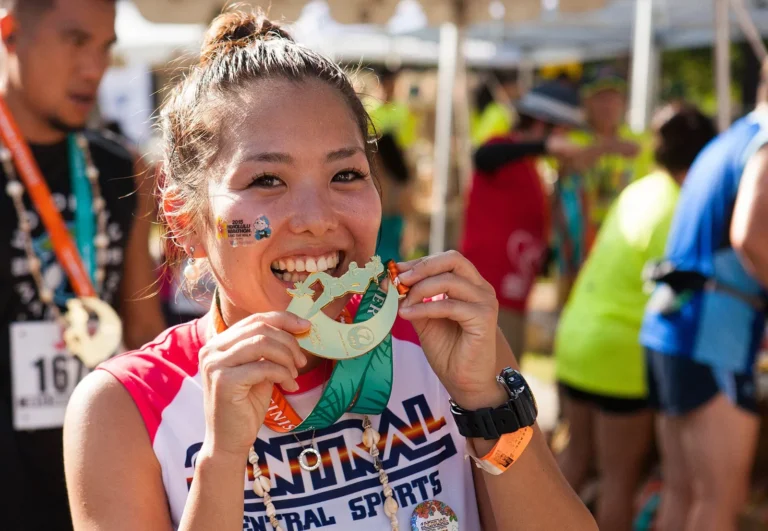
Running in Hawaii heat is the biggest adjustment for most Honolulu Marathon visitors. The official FAQ says race morning is often in the mid-60s °F (18 to 20 °C), rising to the low 80s °F (27 to 28 °C) by mid-morning, humid and sunny. The widely shared advice for runners from cold climates: arrive a few days early if you can, start slower than your usual goal pace, use the 16 aid stations to a plan you’ve practiced, and stop and get help from race medical staff if something feels wrong.
This is general information, not medical advice. We’re a tour company, not doctors or coaches, so please talk to your own doctor before you train or race in the heat, especially if you have a health condition.
How hot and humid is the Honolulu Marathon?
The numbers on their own don’t sound extreme. Mid-60s °F at the start and low 80s °F by mid-morning are pleasant beach temperatures. What makes them hard for a marathon is the combination of three things, all in the official FAQ:
- Humidity. Race morning is described as humid.
- Sun. Sunrise is about 7:00 a.m. on Sunday, December 13, and the FAQ calls mid-morning “humid and sunny.”
- Rising temperatures while you’re running. The 5:00 a.m. start is in the dark, so the race begins at the coolest point of the morning and gets warmer the longer you’re out.
| Part of your race | What it’s like | What to think about |
|---|---|---|
| Start, 5:00 a.m. | Dark, often mid-60s °F, humid | Easy to start too fast because it feels comfortable |
| First two hours | Dark until about 7:00 a.m. | Settle in, drink early, don’t bank time |
| After sunrise | Sun up, temperatures climbing | The miles that feel hardest in the heat start here for most people |
| Mid-morning and later | Low 80s °F, humid, sunny | Slow down, keep to your plan, watch how you feel |
For what to wear in those conditions, see our guide to Honolulu Marathon weather and what to wear. This page is about preparing yourself, not your kit.
Why does heat feel so much harder if you’re coming from winter?
In December, many Honolulu Marathon runners are coming from places where it’s winter: Japan, which has sent the majority of entrants in many years, plus Canada, the northern US, Europe and beyond. If you’ve done your long runs in cold, dry air, your body hasn’t had much reason to get used to warm, humid conditions.
The general idea is simple. Your body cools itself largely by sweating, and sweat cools you best when it evaporates. In humid air it evaporates less readily, so you tend to feel hotter at the same effort, and a pace that felt steady in training can feel noticeably harder. That’s why so much of the usual advice comes back to two things: give yourself some time in the heat before the race, and run by effort rather than by the pace on your watch.

How early should you arrive to get used to the heat?
Sports and public health guidance commonly describes heat adaptation as building over roughly one to two weeks of regular, gradual exposure. Most visitors can’t arrive that early, and that’s fine. Arriving a few days ahead still gives you time to get used to the conditions, to sleep, and to settle in after the flight.
| When you arrive | What it gives you | Worth knowing |
|---|---|---|
| Thursday or Friday before the race | Time for the Expo and a short, easy shakeout run | Little time to adjust to heat or a big time difference |
| Early in race week | A few easy runs in the local conditions, and time to settle | A good compromise for many visitors |
| A week or more ahead | More time in warm, humid air before race day | Plan rest days too; race week isn’t the time for hard sessions |
If you’re coming from Japan, Honolulu is 19 hours behind Japan Standard Time, so your body clock will be well out of step for the first few days. An early arrival gives you time to sort out sleep as well as heat. December in much of Japan is cold, so the change in conditions can feel large even before the flight’s effects are counted.
In race week, the widely shared advice is to keep runs short and easy, run early in the morning when it’s cooler, and save your effort for Sunday. Ask your coach or doctor whether any heat training before you travel suits you.
How should you pace a hot, humid marathon?
The most common piece of advice for hot-weather marathons is to start slower than you think you need to. In Honolulu that’s especially true because the first two hours are in the dark, in the coolest air of the day. It feels easy to run fast, and the bill often comes later in the sun.
A few practical points:
- Know your corral. Your start color is printed on your bib, based on the predicted finish time you gave at registration.
- Use pacers with care. There are official pacers from 3 hours to 5 hours. They can help, but in the heat it’s sensible to run by how you feel, and let a pace group go if it feels too quick.
- Respect the climbs. The main climbs are around Diamond Head, which you pass twice. The second time comes late in the race, when most people are in full sun. Our course guide shows where they are.
- Walk if you need to. There’s no time limit. The finish stays open until the last participant crosses, and walkers get a medal and an official time. Your chip time includes breaks. See our guide to walking the Honolulu Marathon if you plan to mix running and walking.
- Adjust your goal on the day. Many runners treat a hot race as an effort to manage, not a time to chase. That’s a reasonable call, not a failure.
How should you use the 16 aid stations?
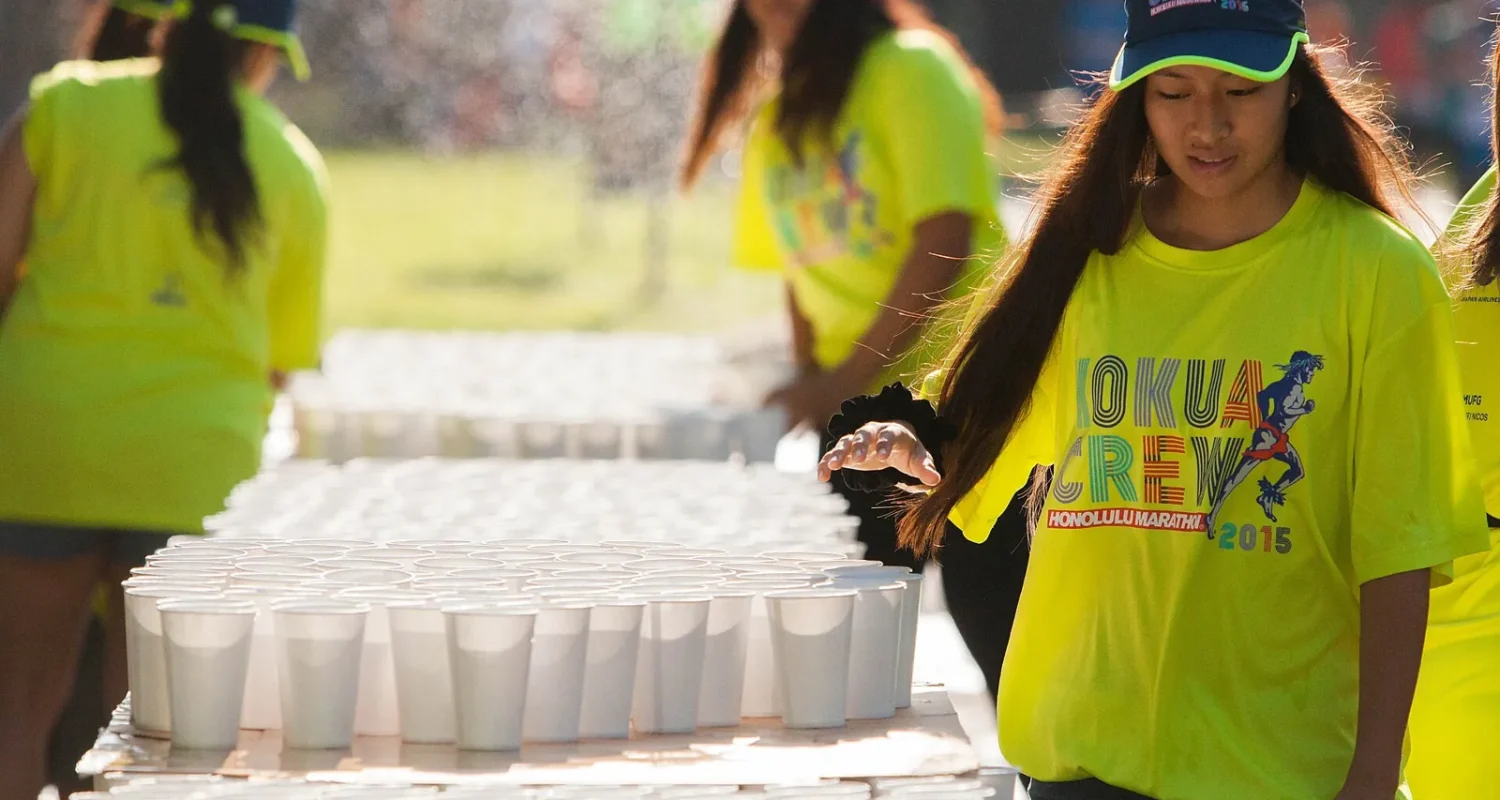
The official FAQ lists 16 aid stations with water, sports drinks and medical help. Precision Fuel & Hydration gels are available on the course, and you may carry your own supplies. Small hydration vests and belts are allowed.
General guidance that most runners follow:
- Practice your drinks and fuel in training. Use the same gels, drinks or chews you plan to use on race day. A long race in the heat is a bad place to try something new.
- Have a plan, and start it early. Don’t wait until you feel thirsty and hot in the second half.
- Don’t overdo it either. Drinking far more than you need can also be dangerous over a long race. Ask your doctor or a sports dietitian how much is right for you.
- Think about salt and sugar, not just water. Sports drinks are at every aid station, and many runners use them as well as water. Your doctor can help you decide what suits you.
- Slow down through the stations. They get crowded. Walking through for a few seconds makes it easier to drink and keeps you out of other runners’ way.
- Use water to feel cooler, if you like. Many runners pour a little over their head or neck on a hot morning.
If you need to carry more, our Honolulu Marathon packing list covers belts, vests and what the race allows.
What are the warning signs that the heat is getting to you?
Public health guidance on heat illness lists warning signs like these. They’re worth knowing before you start, for yourself and for runners around you:
- Dizziness, feeling faint or light-headed
- Headache
- Nausea or vomiting
- Muscle cramps
- Unusual weakness or tiredness
- Feeling cold, clammy or getting goosebumps despite the heat
- Confusion, slurred speech or not making sense
- Stumbling or losing coordination
If you notice signs like these, stop running. Move to the side of the road, into shade if there is any, and get help from the medical staff at the nearest aid station or from a volunteer. If someone near you is confused or collapses, alert race staff straight away, and call 911 in an emergency.
Please don’t push on because of a time goal, a charity pledge or a family member waiting at the finish. There’s no time limit at Honolulu. You can stop, get checked, and still finish later if the medical staff say you’re fine to continue.
Before you travel, it’s also worth a word with your doctor if you take regular medication or have a heart, lung or other health condition, since some can affect how you cope with heat.
Supporters, take a day for yourselves. While your runner rests and keeps race week easy, family and friends can see the whole island with us Thursday to Saturday. Runners can join from Monday, December 14. The Standard tour is $59 per person. Check dates and book the tour
What habits help in the days before the race?
The days before a hot marathon are about arriving at the start line fresh. General, sensible habits:
- Stay out of the strongest midday sun where you can. Waikiki makes it easy to spend long hours on the beach; save that for after the race.
- Keep sightseeing gentle. The Diamond Head summit hike, long walks in the sun and big days out can wait. Runners should think twice about a 9.5-hour tour day just before the marathon, even though most of it is spent riding between stops.
- Eat foods you know. Race week is a good time to stick to familiar meals.
- Get your race-morning plan sorted early. The free shuttles from the Honolulu Zoo to the start run from 2:00 a.m. to 4:00 a.m., which means a very early night. Our race morning guide has the timings.
- Collect your packet early in the Expo window so you aren’t walking around the Hawaiʻi Convention Center for hours on Saturday.
If it’s your first time in Honolulu, the first-timers guide explains how the whole week fits together.
What happens after you finish in the heat?
You’ll finish in Kapiʻolani Park, usually in full sun. The finisher area has water and recovery drinks, along with bananas, malasadas, your medal and your finisher shirt. General post-race advice is simple: keep walking gently for a bit, find some shade, keep drinking to your plan, and meet your family at a spot you agreed before the race.
If you feel unwell after finishing, the same rule applies as on the course: tell race medical staff.
Over the following days, many runners like a calm, sit-down way to see the island. Our full-day circle island tour runs from Monday, December 14 onward. Most of the 9.5-hour day is spent riding between stops, the stops run 15 to 40 minutes except Turtle Beach at 75 minutes, and you decide how much you walk at each one. We don’t claim it does anything for sore legs; it’s simply a way to see Diamond Head, the windward coast and the North Shore without driving. Please don’t plan a tour for Sunday, December 13, because roads on our route are closed that morning; call (808) 294-9906 first if you’re considering it.
For the full race-week picture, see our Honolulu Marathon 2026 visitor guide.
Good to know (checked November 2026)
- The official FAQ says race morning is often mid-60s °F (18 to 20 °C), rising to the low 80s °F (27 to 28 °C) by mid-morning, humid and sunny.
- Sunrise on December 13 is about 7:00 a.m., so the first two hours are in the dark and the rest in rising heat.
- There are 16 aid stations with water, sports drinks and medical help; you may carry your own supplies.
- There’s no time limit, and officials may delay, modify or cancel the race in dangerous conditions.
- Sources: the official FAQs and the JAL Honolulu Marathon event page. This page is general information, not medical advice.
FAQ
How hot is the Honolulu Marathon?
The official FAQ says race morning is often in the mid-60s °F (18 to 20 °C), rising to the low 80s °F (27 to 28 °C) by mid-morning. It’s humid, and sunny after sunrise at about 7:00 a.m.
How many days before the Honolulu Marathon should I arrive?
There’s no official rule. Guidance commonly describes heat adaptation as taking one to two weeks, so many visitors arrive at least a few days early to settle in, sleep and do some easy runs in the local conditions.
How many aid stations are on the Honolulu Marathon course?
Sixteen, with water, sports drinks and medical help. Gels are available on course, and you may carry your own supplies.
Should I run slower in the Honolulu heat?
Most hot-weather advice says yes: start slower than your usual goal pace and run by effort. The first two hours are in the cooler dark, so it’s easy to go out too fast.
What should I do if I feel ill during the Honolulu Marathon?
Stop, move to the side of the road and get help from medical staff at the nearest aid station or from a volunteer. Call 911 in an emergency.
Is the Honolulu Marathon a good first marathon for runners from cold countries?
Many runners from Japan and other cold-winter places take part every year, and there’s no time limit, which takes pressure off. Talk to your doctor before training for a race in the heat, and plan to adjust your pace.
Respect the heat, enjoy the race
Honolulu’s heat and humidity aren’t a reason to stay home. They’re a reason to plan: arrive early if you can, start slow in the cool dark miles, drink to a plan you’ve practiced, and stop and ask for help if your body tells you to. With no time limit, you have room to be sensible and still get your medal.
See the island once the race is done. From Monday, December 14, our full-day tour picks up at six points in Waikiki between 6:50 and 7:15 a.m., starting at the Diamond Head Lookout on the road you ran. The Promo loop is $49 with code FANTASY50; running clubs of 10 to 29 can book a private charter. Check dates and book the tour
See the full-day tour details for every stop.
Aloha Fantasy Tours has run circle island tours on Oahu since 2010.
Photo credits: Anthony Quintano from Honolulu, HI, United States, CC BY 2.0; Anthony Quintano from Honolulu, HI, United States, CC BY 2.0. Race photos are from past Honolulu Marathons.